Small tuition classes operate at an awkward scale: too many students to track on paper, too few to justify commercial school software with per-student pricing and features built for a principal’s office. The gap became concrete when a Reddit user described running a class with no attendance system at all: paper lists, payment disputes with no records to resolve them. Attendly was built for exactly this operating point: a complete attendance, billing, and notification system for a class of 100+ students, open source, self-hosted on a single low-cost VPS.
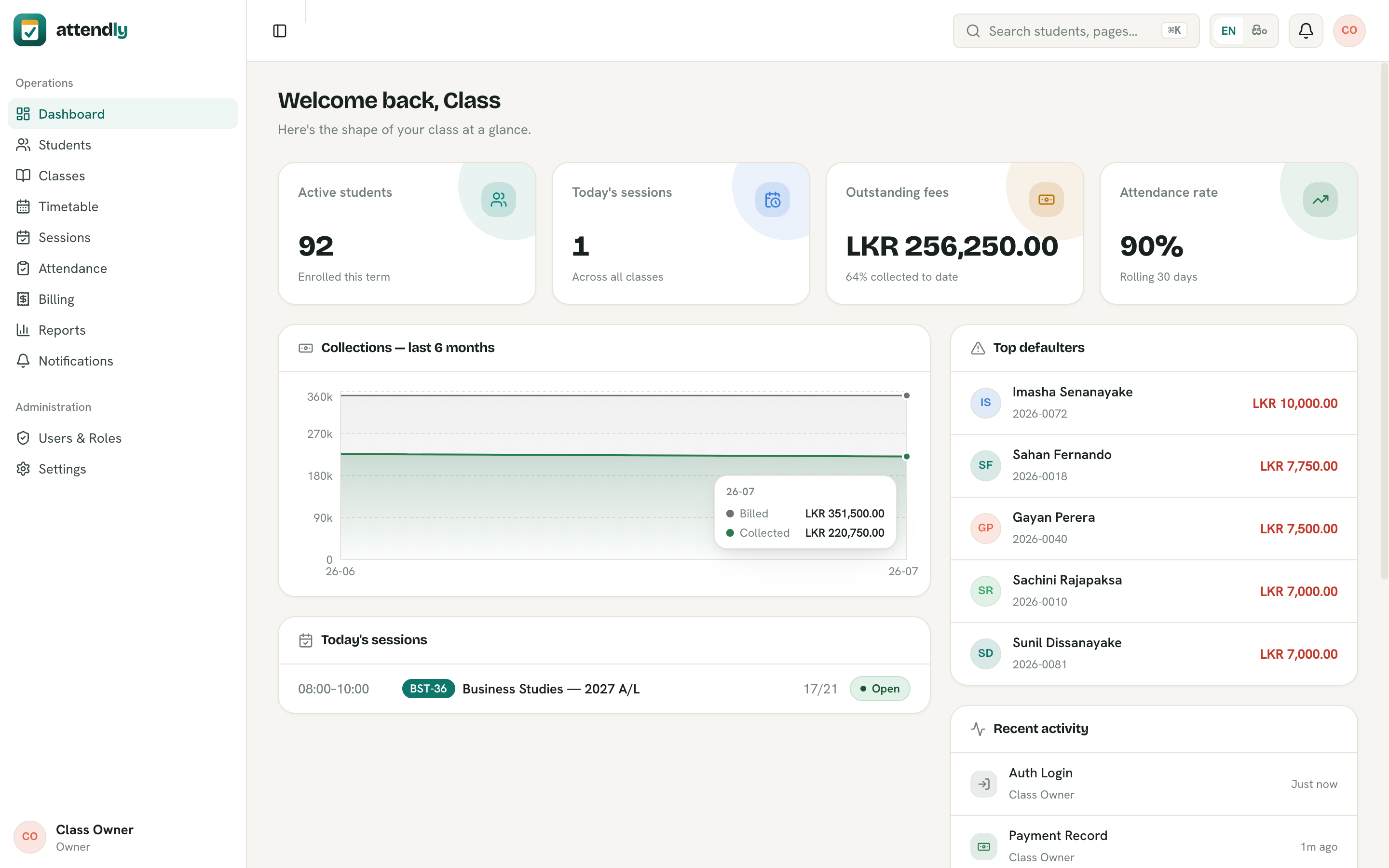
Figure 1: The admin dashboard, running on the demo dataset of 172 students.
Motivation
Before writing any code, three constraints shaped the design:
- One operator. The person deploying this is a teacher, not an infrastructure team. Every additional service is a liability.
- The classroom door. Peak load is not requests per second; it is eighty students arriving in a twenty-minute window, checked in by one person standing at a door with unreliable connectivity.
- Money is the real dispute. Attendance arguments in a tuition class are usually payment arguments: who attended which month, who paid, who is behind. Attendance without billing solves half the problem.
These constraints ruled out the default architecture (managed database, separate services, cloud-only) before it was considered.
Architecture
Attendly is a monorepo with three deployable pieces: a Go backend, a React admin portal, and an Expo mobile app for door check-in.
The backend is a single Go process with SQLite embedded in-process. All business logic lives there: students, sessions, role-based access control, scheduled invoice generation, PDF receipts, and notifications. It deploys as one Docker container behind nginx and Cloudflare, and GitHub Actions redeploys it on every merge to main.
Embedding the database was the defining decision. There is no database server, no connection pool, and no network hop between the application and its data, so queries return in microseconds. The entire persistent state of the class is one file on one disk; backing up the system is copying a file. For this workload the trade-off is favorable: SQLite’s single-writer model is a real constraint, but a class of 100+ students produces write volumes far below the point where it matters. Most systems are smaller than their architecture.
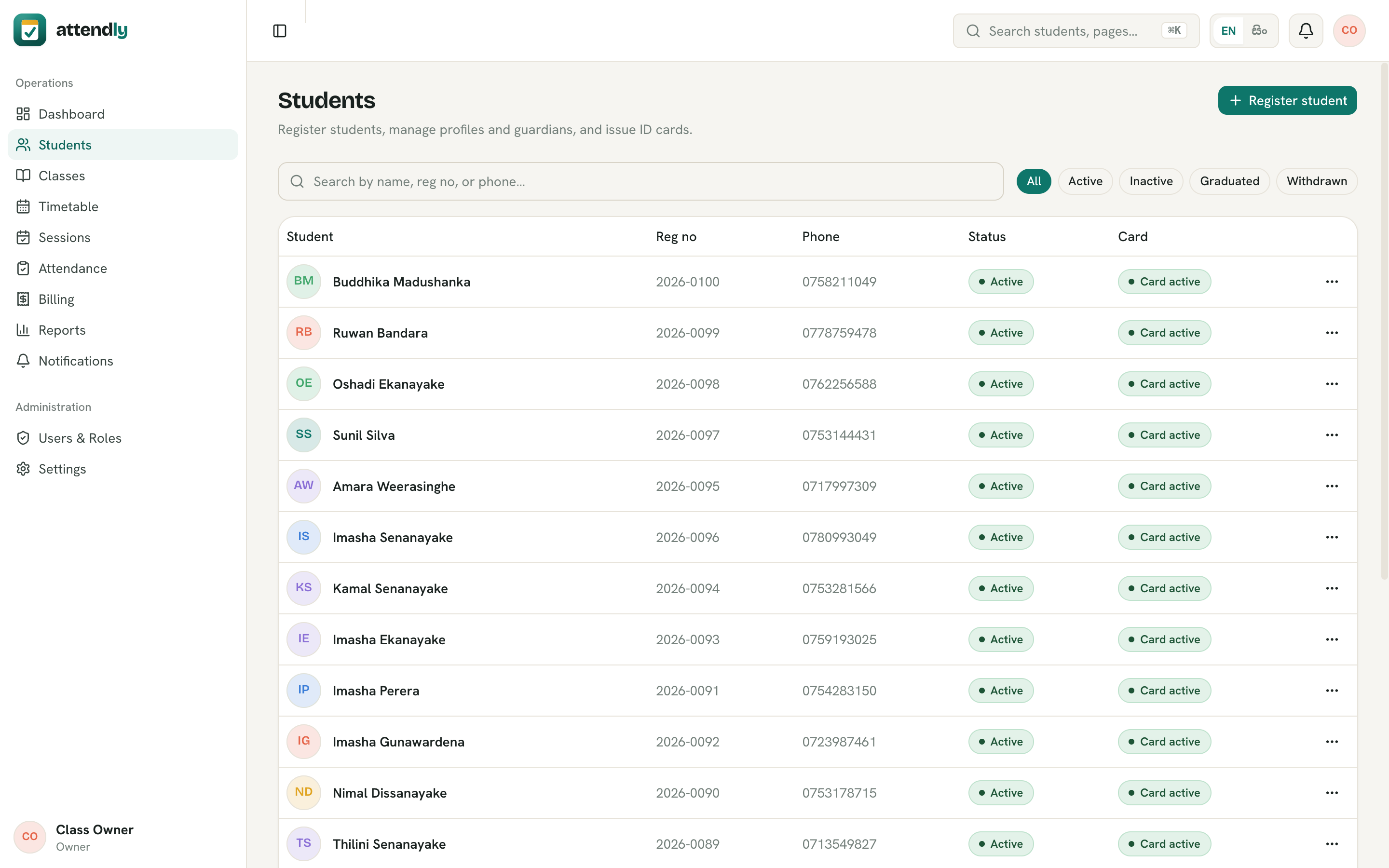
Figure 2: The roster view. Each row joins attendance history with billing status.
The door check-in flow
The mobile app has one job: check students in at the door as fast as the queue moves. A student presents a QR card and the camera decodes it, or the operator searches a name. One tap marks present or late, and session counts update live.
The controlling design decision is that offline is the primary state, not an error state. Classroom connectivity fails routinely, and a queue of students does not wait for a spinner. Check-ins are written to a local queue first and synced when connectivity allows. The UI reports sync state explicitly, with a manual sync control, so the operator always knows whether the server has caught up. On reconnect, the API reconciles queued marks against the scheduled session, opening it if check-ins arrive before the session was formally started.
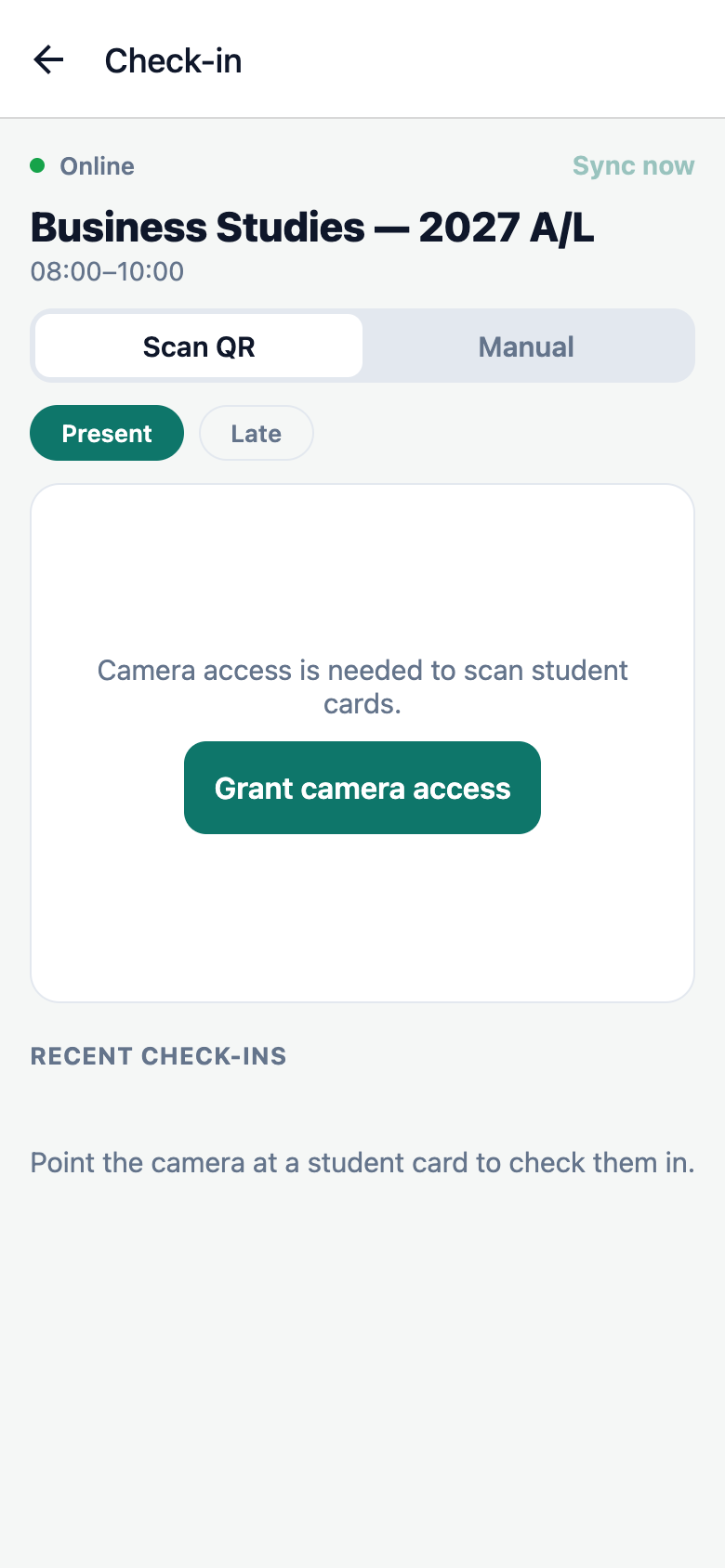
Figure 3: The check-in screen: QR scanning, manual lookup, and sync status in one view.
Billing as a first-class subsystem
Sessions feed invoices; invoices track full and partial payments; a defaulter view surfaces accounts in arrears before the conversation has to happen at the door. Receipts render as PDFs from the same Go process, and Cloudflare R2 stores uploads when configured. Keeping billing inside the attendance system, rather than bolted on, is what turns attendance records into evidence that settles disputes.
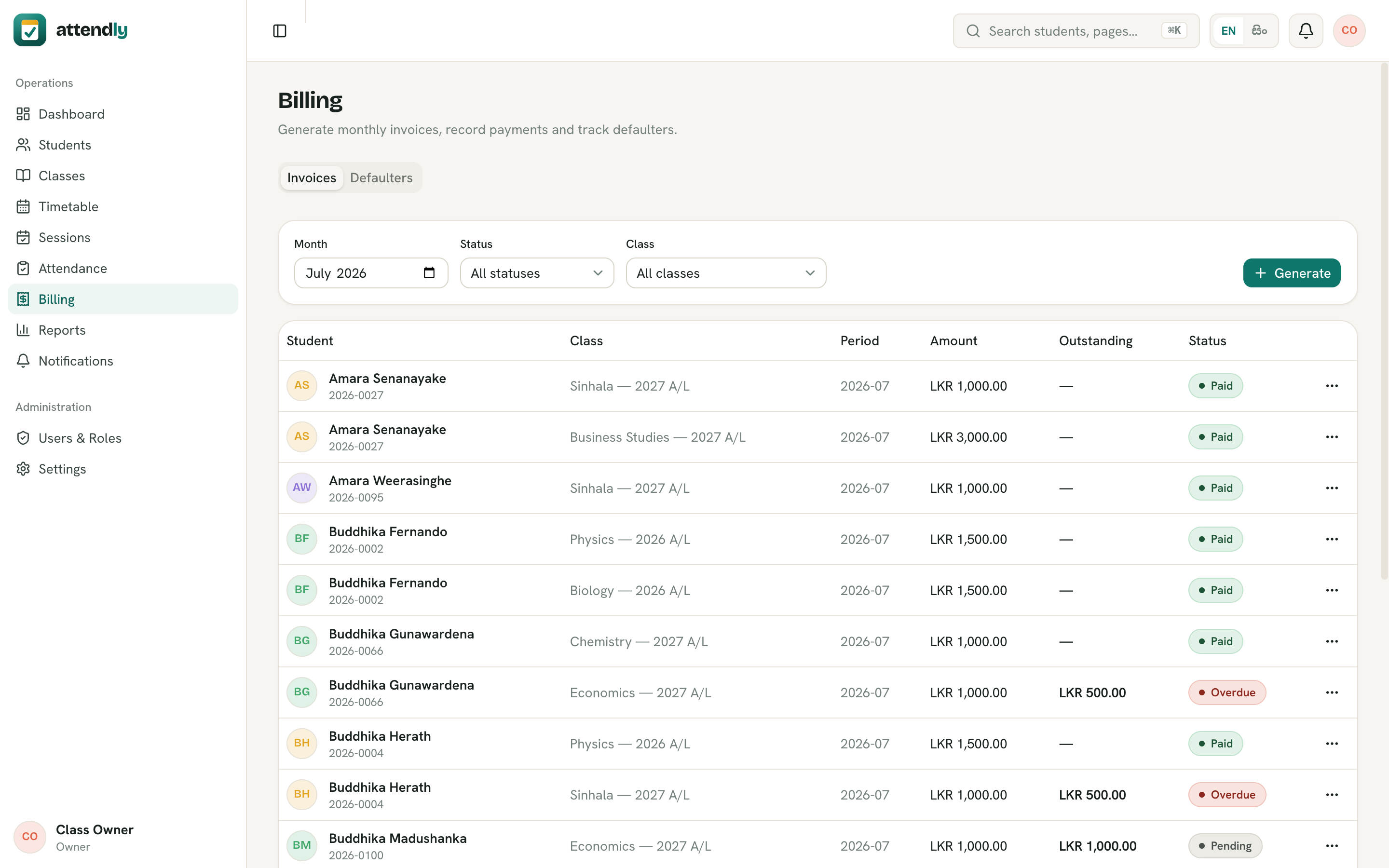
Figure 4: Invoice states across the demo dataset: 182 paid, 84 partial, 78 unpaid.
Results
The demo seeder generates 172 students, four classes, 1,763 attendance records, and a full billing history; every admin page renders without perceptible latency on a shared 8-core VPS where Attendly’s container holds about 4 MB of resident memory at idle. The production instance runs for a real class today, deployed automatically on merge.
Before the open-source release, the working tree and all 102 commits of history were audited with gitleaks. The single finding was a fabricated token in a PDF test fixture; no real credential was ever committed.
Moving forward
Two lessons from this build apply beyond it. First, sizing architecture to the actual workload, rather than to convention, removed entire categories of operational work: there is no database server to patch, monitor, or back up separately. Second, designing the mobile client around its worst network case produced a better experience in every case; the sync-state UI that exists for offline recovery turned out to be what operators check most.
The system is MIT licensed at prabhavalabs/attendly, with a five-minute local setup and the demo seeder used for every figure in this post. Planned next steps are NFC card support at the door and a parent-facing notification channel.